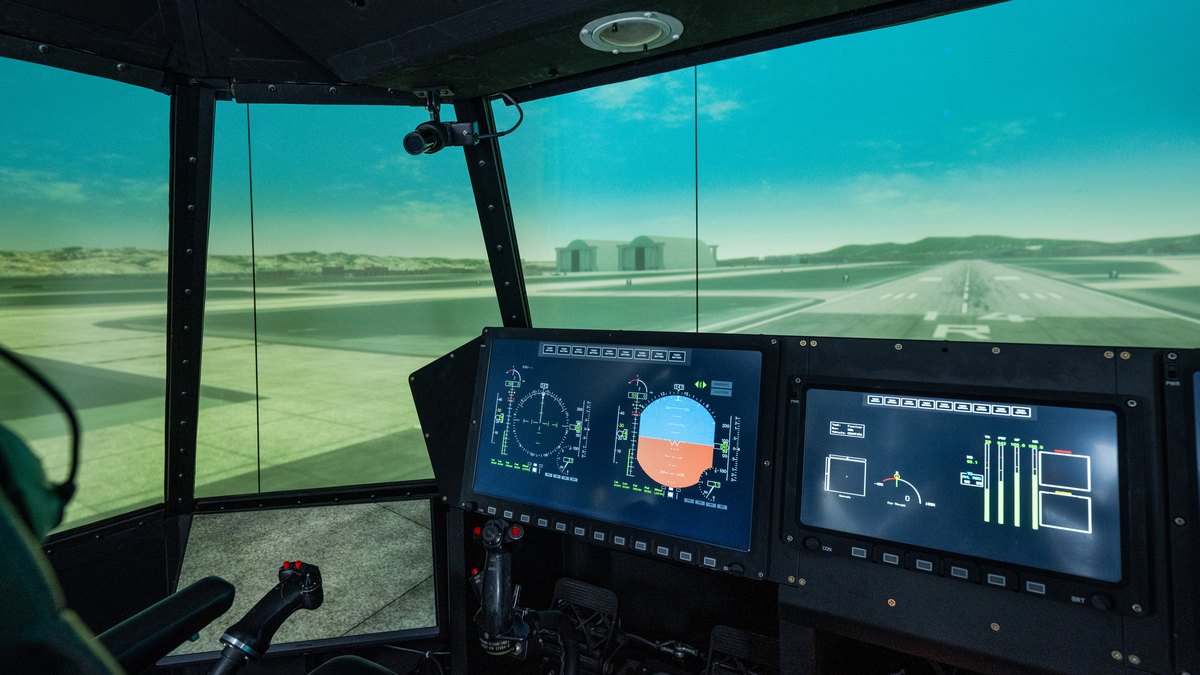
NASA upgraded its Vertical Motion Simulator at the Ames Research Center in California's Silicon Valley, replacing analog hardware with digital displays and modular vehicle cockpits, the agency announced.
The facility has operated since 1979 as the largest motion simulator in the world. It can travel 60 feet vertically and 40 feet horizontally to mimic the flight dynamics of vehicles ranging from helicopters to spacecraft.
A new dome enclosure surrounds the cockpit with 4K projectors that provide visual sharpness near 20/20 and an expanded field of view. The system also automatically aligns and color-matches imagery against simulated backgrounds, eliminating manual calibration that previously took hours or days.
“The new dome configuration and improved systems can support far more aggressive mission tasks while giving pilots and crews a more realistic environment to work in,” said Diana Acosta, aerospace simulation research and development branch chief at NASA Ames. “It strengthens how teams coordinate, react, and manage challenging scenarios, exactly the kind of preparation we need for the missions coming next.”
Cockpit reconfigurations now rely on modular components rather than structural cab replacements. Teams previously had to swap an entire heavy cab when switching test profiles from lunar landers to air taxis. The simulator now accepts lighter, removable inserts containing only the controls, seats, and panels needed for a specific vehicle, cutting configuration time in half.
The modernized simulator will support ground tests for next-generation aircraft, commercial air taxis, and crewed lunar and Martian landing systems before flight hardware is built.