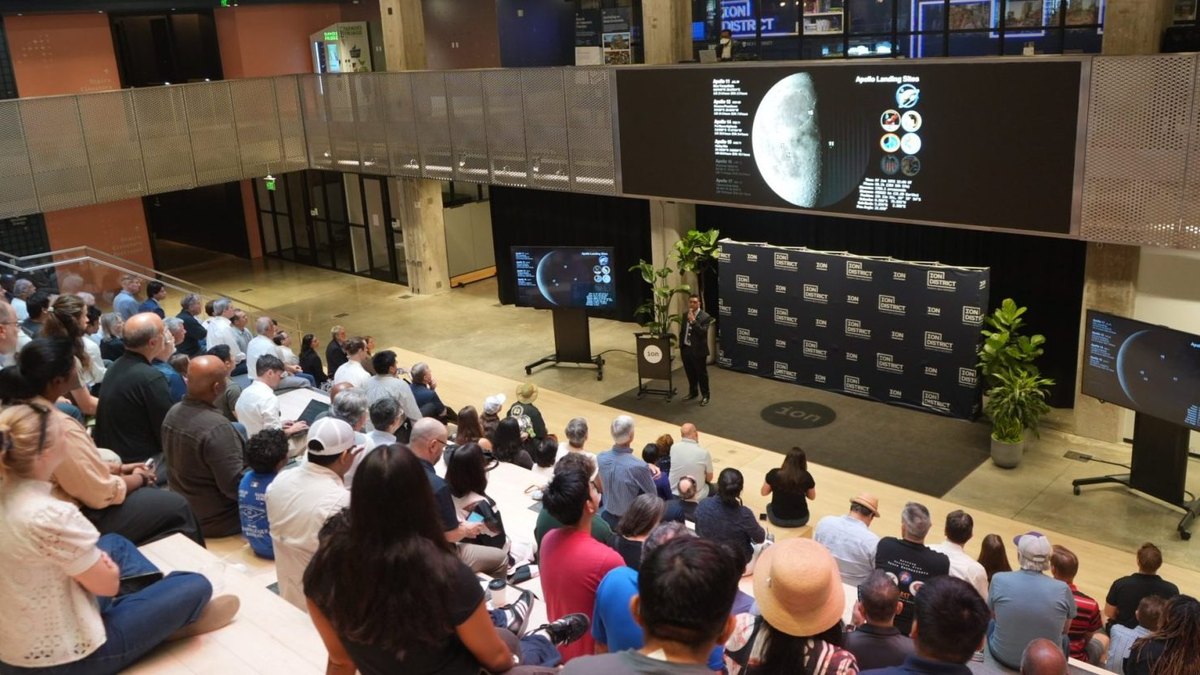
NASA principal systems engineer Shatel Bhakta detailed the technical and logistical hurdles facing the agency's Moon Base Program during a presentation at the Ion innovation hub in Houston, NASA reported. Bhakta outlined plans for establishing a long-term human presence at the lunar South Pole through a phased approach of early robotic missions and technology demonstrations designed to gather environmental data and reduce operational risks.
The July 30 presentation formed part of a recurring series hosted by NASA's Johnson Space Center in partnership with Rice University and the Ion. Laura Neder, head of platform for the Rice Alliance and the Ion District, introduced Monte Goforth, acting director of business development and technology integration at Johnson Space Center. Goforth delivered opening remarks on agency collaboration before Bhakta addressed the gathering of researchers, entrepreneurs, and students.
The lunar South Pole presents environmental conditions that differ sharply from previous Apollo landing sites. Low solar angles create long, shifting shadows across steep slopes and deep craters, leaving solar panels without light for extended durations. These light patterns require dedicated energy storage systems and alternative power supplies to keep equipment functioning. Rugged surface terrain also obstructs direct line-of-sight communication with Earth, requiring NASA to deploy specialized surface relay infrastructure.
Bhakta noted that the Moon Base may consist of distributed structures spread across the lunar surface rather than a single connected cluster. Ground terrain, power availability, and landing constraints will drive how habitats and surface equipment are positioned. Additionally, sharp, clingy lunar dust poses severe risks to spacesuits, machinery, and astronaut health. Static electricity on dust particles changes based on lighting conditions, making dust mitigation a central focus for safe surface operations.
Permanently shadowed craters near the South Pole have lacked direct sunlight for billions of years and contain water ice and volatile materials. Extracting these resources will require new mobility, power, and processing systems. Bhakta emphasized managing system connections over individual components during design, advising teams to focus on system interfaces rather than isolated technologies.
NASA stated that building the lunar installation requires expertise beyond traditional engineering, including business professionals and communicators. The agency currently maintains open solicitations for industry and international partners to participate in early technology demonstrations and long-term surface operations.