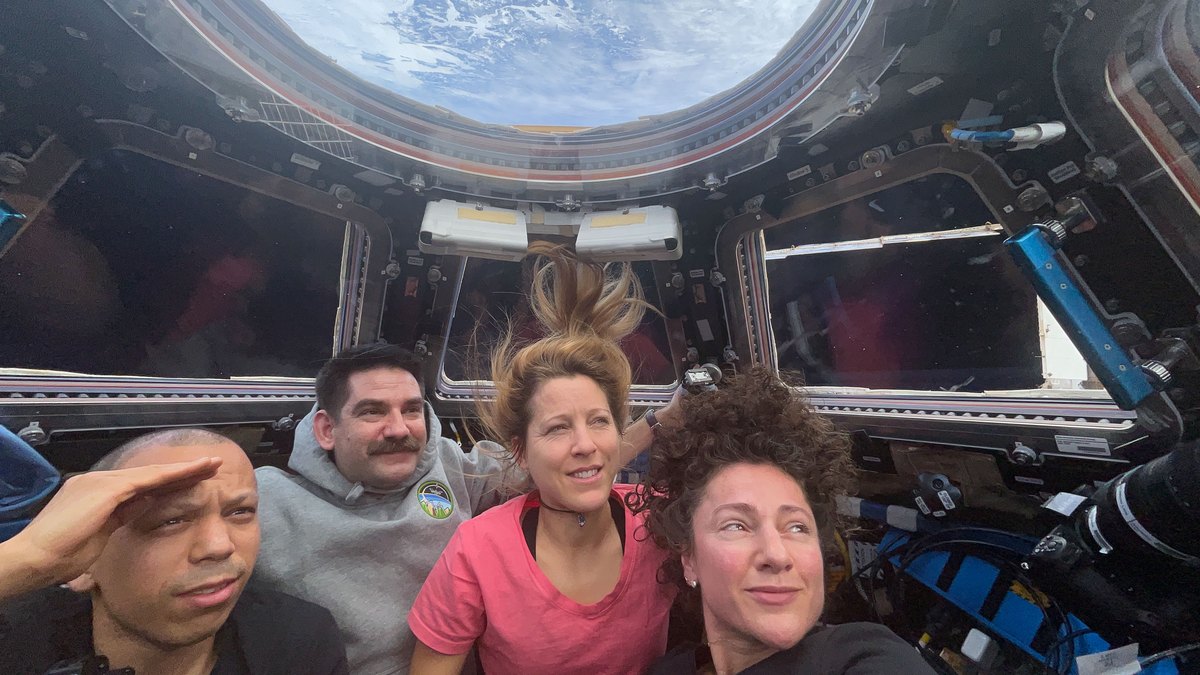
NASA outlined a series of International Space Station research projects on Aug. 11 designed to prepare astronauts and spacecraft for sustained exploration of the Moon and Mars. The announcement follows the Artemis II mission in April, which marked the first crewed flight around the Moon in over 50 years.
Astronauts aboard the orbiting laboratory are currently running technology demonstrations, biological studies, and spacecraft monitoring experiments. These projects address logistical, medical, and operational challenges that crews will face when traveling beyond low Earth orbit without frequent resupply missions from Earth.
Exercise and Medical Equipment
European Space Agency astronaut Sophie Adenot activated the European Enhanced Exploration Exercise Device, known as E4D, to begin a two-year technology demonstration. The system provides a compact exercise platform that can simulate various gravity levels for spaceflight crews.
Regular physical exercise remains vital during long space flights because microgravity causes astronauts to lose between 1% and 1.5% of their bone density each month on average. This rapid loss increases the risk of bone fractures and related physiological issues during missions. Compact systems like E4D aim to reduce the physical footprint of fitness equipment while maintaining crew health.
Medical care far from Earth presents another hurdle due to supply constraints. Commercially available intravenous fluids have a shelf life of approximately 16 months, making long-distance storage difficult. To address this limit, the Intravenous Fluid Generation – Mini investigation, or IVGEN Mini, tests generating IV fluids directly from the station’s potable water supply, cutting down on required launch mass and payload volume.
Operational efficiency is also under evaluation through the Test facility for lab-aUtomation System in Kibo, designated as TUSK. This project measures how microgravity impacts delicate robotic movements that require high precision. Insights from TUSK will inform the design of future automated systems capable of completing routine tasks independently, saving crew time.
Human Health and Physiology
Spaceflight research uses crew members as test subjects to observe how the human body adapts to extended periods in microgravity. Astronauts regularly collect biological samples, undergo medical examinations, and take physiological scans to monitor internal changes.
Weightlessness can disrupt normal cardiovascular functions and alter blood circulation. The Spaceflight Thrombosis and Risk Factors experiment, also called Venous Haemostasis, tracks variations in blood flow to identify specific physical markers and establish preventative measures against condition risks such as blood clots.
Changes in blood pressure regulation often accompany shifts in cardiovascular and respiratory systems. The Causal Analysis of Cardiorespiratory Coupling on the ISS, or CARDIOBREATH, tracks these changes using a wearable "smart shirt" known as the Bio-Monitor. The garment records heart rate, blood pressure, breathing rate, and physical activity during exercise sessions to help doctors mitigate cardiorespiratory risks.
Mental health protocols are also undergoing testing to manage the impact of prolonged isolation and confinement. The RelaxPro experiment, formally named Mind/Body Practices for Deep Space Exploration, tests non-invasive techniques including meditation. Researchers intend to build a structured routine from these practices to lower stress levels and enhance sleep quality on long deep space journeys.
Spacecraft and Environmental Monitoring
Spacecraft operating beyond low Earth orbit must provide reliable radiation protection and environmental management. Testing life-support systems and structural technologies on the space station allows researchers to refine designs for future long-distance vessels.
Radiation monitoring on the station includes the Fiber-optic Active Dosimeter, known as Lumina. The device uses optical fibers that darken upon exposure to ionizing radiation, giving real-time measurements of radiation levels to keep astronauts safe.
Propulsion research on the complex focuses on cryogenic fuels, which must stay at extremely low temperatures to remain liquid. In space, temperature fluctuations can cause these fuels to evaporate and vent, lowering overall fuel efficiency. The Zero Boil-Off Tank Noncondensables investigation, or ZBOT-NC, studies how noncondensable gases influence internal tank pressure, evaporation, and condensation rates. Data from ZBOT-NC will help engineers validate computer models and build more efficient fuel storage systems.
Environmental safety inside the living quarters requires active surveillance of microbial life. The Genomic Enumeration of Antibiotic Resistance in Space project, known as GEARS, uses DNA sequencing technology to survey the station for antibiotic-resistant bacteria. The investigation seeks to improve rapid, onsite genetic identification so crews can diagnose potential bacterial adaptations directly aboard future spacecraft.