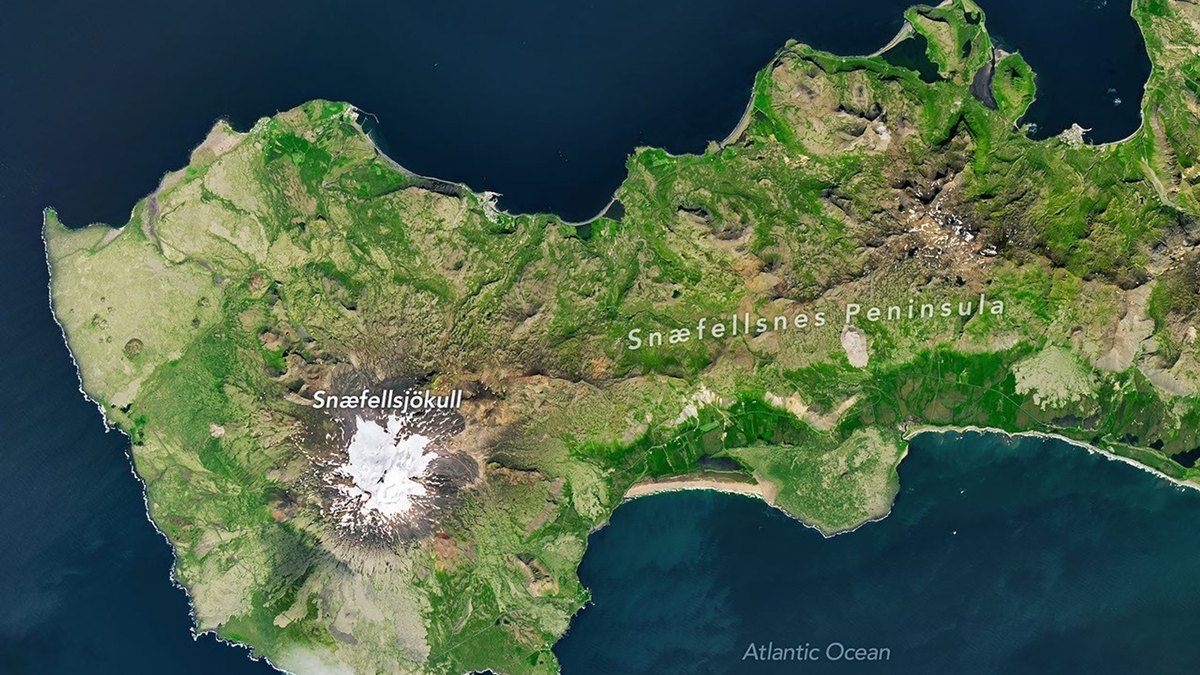
NASA announced that a total solar eclipse will occur on August 12, 2026, with the path of totality passing across a limited number of Northern Hemisphere land locations. The Moon’s shadow will first cross the Arctic Circle from northern Russia and track along the eastern coast of Greenland before approaching Iceland and Spain.
In Iceland, western regions including the Snæfellsnes peninsula will begin experiencing totality at approximately 5:45 p.m. local time, or 17:45 Universal Time, according to NASA. The maximum eclipse will take place near the sparsely populated peninsula, where the Moon covers the greatest portion of the Sun. Snæfellsjökull, an ice-covered stratovolcano located on the western tip of the peninsula, last erupted roughly 1,800 years ago and sits within Snæfellsjökull National Park. In 2025, UNESCO designated a broader portion of the peninsula as a biosphere reserve housing over 70 percent of Iceland's flora.
After crossing the North Atlantic, the shadow will reach northern Spain shortly before sunset. The path runs east-southeast across the country along a trajectory similar to the Ebro River. Originating in the Parque Natural de Montes Obarenes-San Zadornil, the river passes through the Cantabrian Mountains and the La Rioja wine region before reaching its delta on the Mediterranean coast between Barcelona and Valencia, approximately 400 kilometers away.
Decades of satellite cloud-cover measurements show observers in Spain have a higher probability of clear skies during the eclipse than observers in Iceland, NASA reported. While totality remains limited to a narrow track, a partial solar eclipse will be visible across the rest of Europe, parts of Africa, Canada, and the northern and northeastern United States. The event follows the previous total solar eclipse that crossed North America on April 8, 2024.
