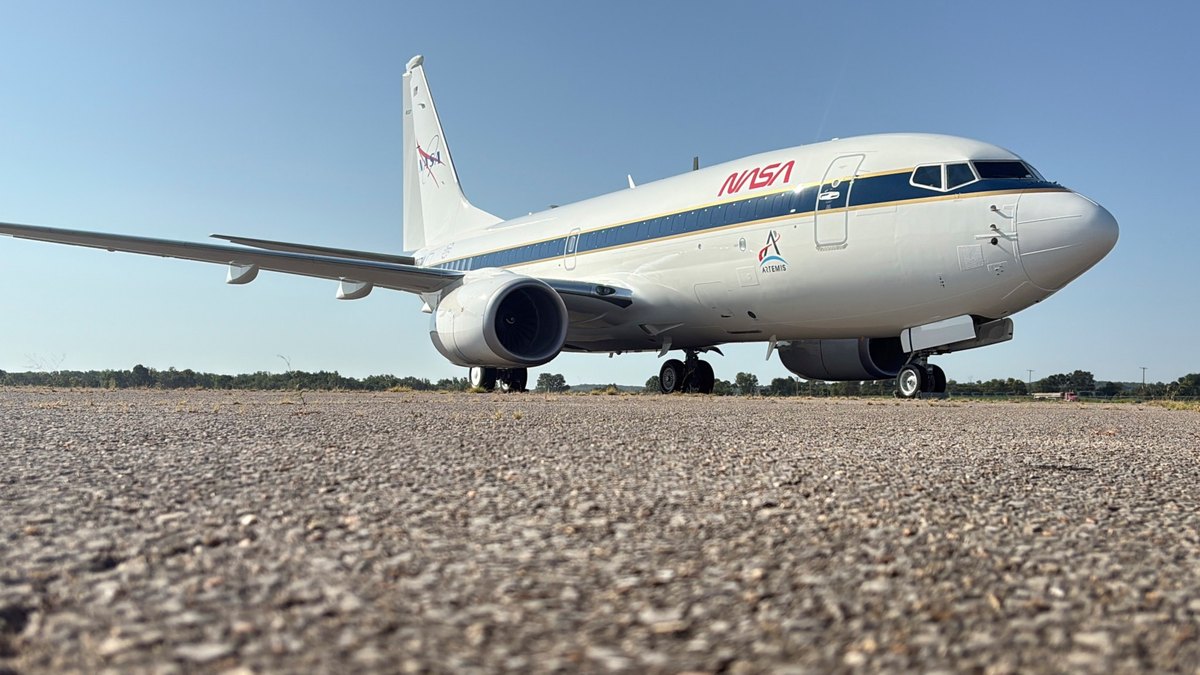
NASA completed painting work on its 737 aircraft in Oklahoma this week, marking progress on modifications that will turn the jet into a dedicated reduced-gravity research platform. The agency announced the milestone as technicians continue conversion work to prepare the platform for agency-wide scientific and flight-testing programs.
NASA’s Armstrong Flight Research Center, located at Edwards in California, took ownership of the aircraft from the United States Air Force in June. Armstrong is directing the aircraft's integration work as the center prepares the jet for long-term duties supporting both space exploration hardware and experimental aeronautics.
The modified aircraft will perform parabolic flights calibrated to generate lunar-gravity environments in flight. NASA researchers will use those low-gravity parabolic arcs to test and validate pressurized astronaut lunar suits, along with the associated crew systems required to support the agency's Artemis lunar mission objectives.
Reduced-gravity flight operations will take place at NASA’s Johnson Space Center in Houston, where flight crews will conduct the parabolic evaluations. NASA Armstrong will retain direct operational and technical oversight of the 737 throughout its deployment for the Houston-based missions.
In addition to parabolic flight campaigns, the aircraft will serve as a primary platform for systems-integration research. NASA will use the jet as an airborne testbed for flight testing experimental autonomy, advanced aviation sensors, and other digital systems in real flight conditions.
