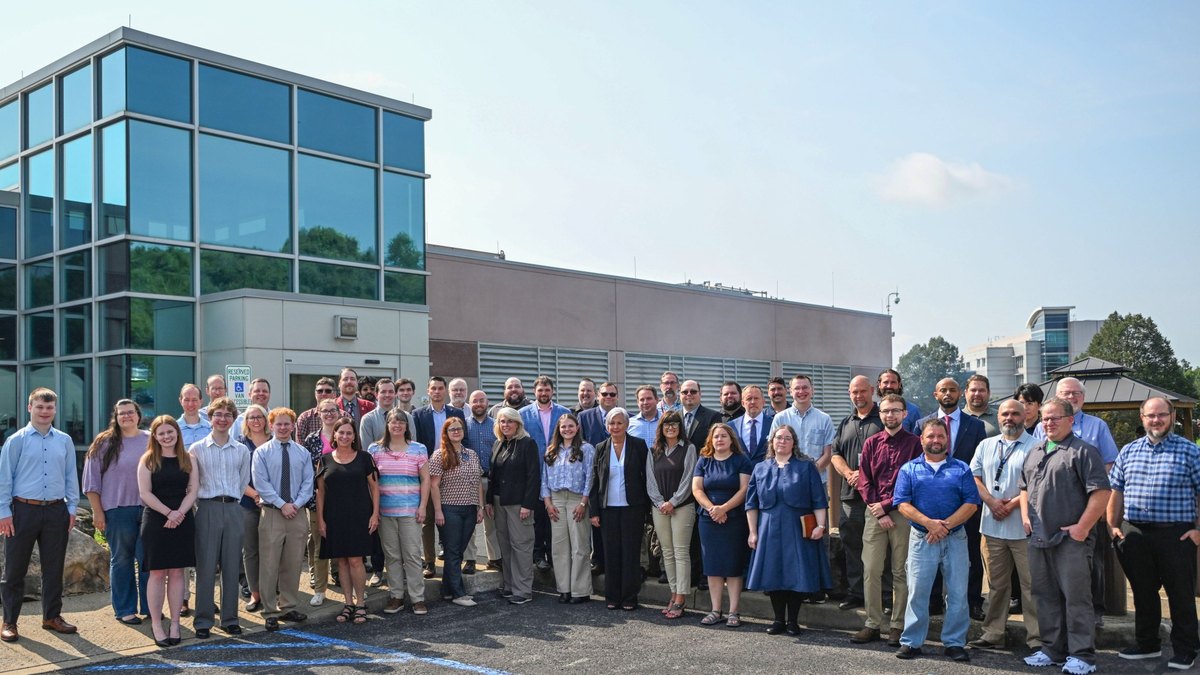
NASA swore in systems engineer Fletcher Newell and 48 of his colleagues as civil servants on Aug. 10 at the Katherine Johnson Independent Verification & Validation Facility in Fairmont, West Virginia, according to reporting released by NASA. The transition forms part of an agency workforce directive designed to convert mission-critical technical and engineering positions into permanent civil service roles.
Newell, a native of Grafton, West Virginia, first toured the Fairmont facility on a fourth-grade field trip in 2013. He taught himself programming during high school by writing scripts on a graphing calculator in algebra class before moving to larger software applications. As a high school junior in 2019, Newell joined the IV&V high school internship program, where he built a database to catalog engineering methods across hundreds of procedural documents.
Newell completed his undergraduate and master's degrees in computer science at Stanford University, focusing on artificial intelligence and machine learning. Rather than taking internships in Silicon Valley, he returned to the Fairmont facility for three consecutive summers. His internship research covered AI safety for onboard spacecraft autonomy, validation for vision-based Terrain Relative Navigation systems that operate without GPS, and the integration of generative AI into mission assurance. Newell also conducted research on autonomous space docking at Stanford's Center for AI Safety, producing two publications.
NASA contractor operations brought Newell back to IV&V as a systems engineer in early 2025. He evaluated mission safety and security across several active programs, including Orion, Gateway, the Human Landing System, and Space Reactor-1 Freedom, while assisting with the agency's AI adoption guidelines. Less than a year into that role, the facility named him the 2025 IV&V Engineer of the Year after he identified more than 70 mission-impact issues across Gateway and SR-1 Freedom.
IV&V Director Wes Deadrick stated that the civil service appointments are intended to preserve technical capabilities for long-term mission assurance. Newell's current engineering duties focus on identifying safety and security vulnerabilities that could cause loss of vehicle control or affect crew safety across lunar exploration systems, including surface landers and hardware intended for an eventual Moon Base.
