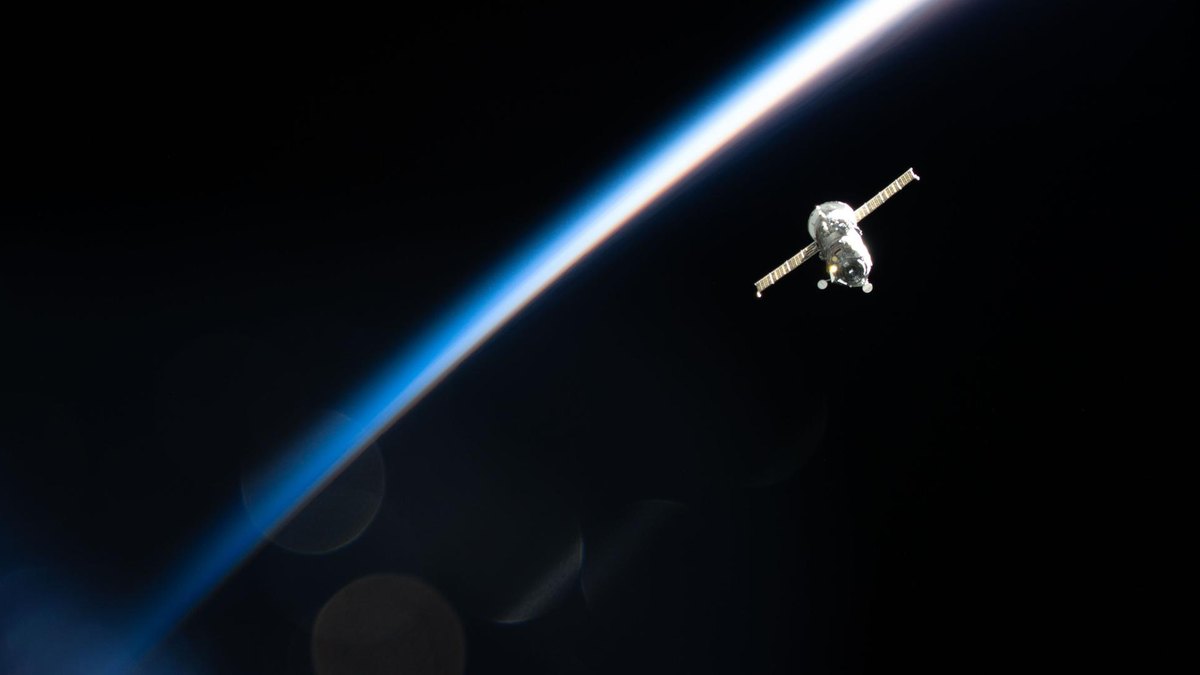
NASA announced it will broadcast live coverage for the launch and automated docking of the Roscosmos Progress 96 cargo spacecraft. The unpiloted resupply ship is carrying roughly three tons of food, fuel, and crew supplies to the International Space Station.
A Soyuz rocket will loft the spacecraft from the Baikonur Cosmodrome in Kazakhstan at 12:15 p.m. EDT on Wednesday, Sept. 9, which corresponds to 9:15 p.m. Baikonur time. NASA confirmed its live launch broadcast will begin at 12 p.m. EDT across multiple agency platforms, including its primary streaming site.
Progress 96 will spend two days in transit before docking autonomously to the space-facing port of the station's Poisk module. That arrival is scheduled for 2:37 p.m. EDT on Friday, Sept. 11, with NASA initiating its broadcast coverage at 1:45 p.m. EDT. The craft will remain at the orbiting complex for about five months, after which it will depart to burn up during atmospheric re-entry over the Pacific Ocean.
Station operations will adjust ahead of the delivery. The older Progress 94 spacecraft is scheduled to undock from the space station at roughly 11:18 a.m. EDT on Monday, Sept. 7. It will then undergo its own planned destructive re-entry into Earth's atmosphere. NASA noted it will not broadcast live coverage of the Progress 94 undocking.
Human crews have maintained a continuous presence aboard the orbiting laboratory for more than 25 years, conducting scientific research not possible on Earth. NASA uses the station to evaluate the operational challenges of human spaceflight, foster commercial opportunities in low Earth orbit, and develop systems for future missions to the Moon under Artemis and eventual flights to Mars.