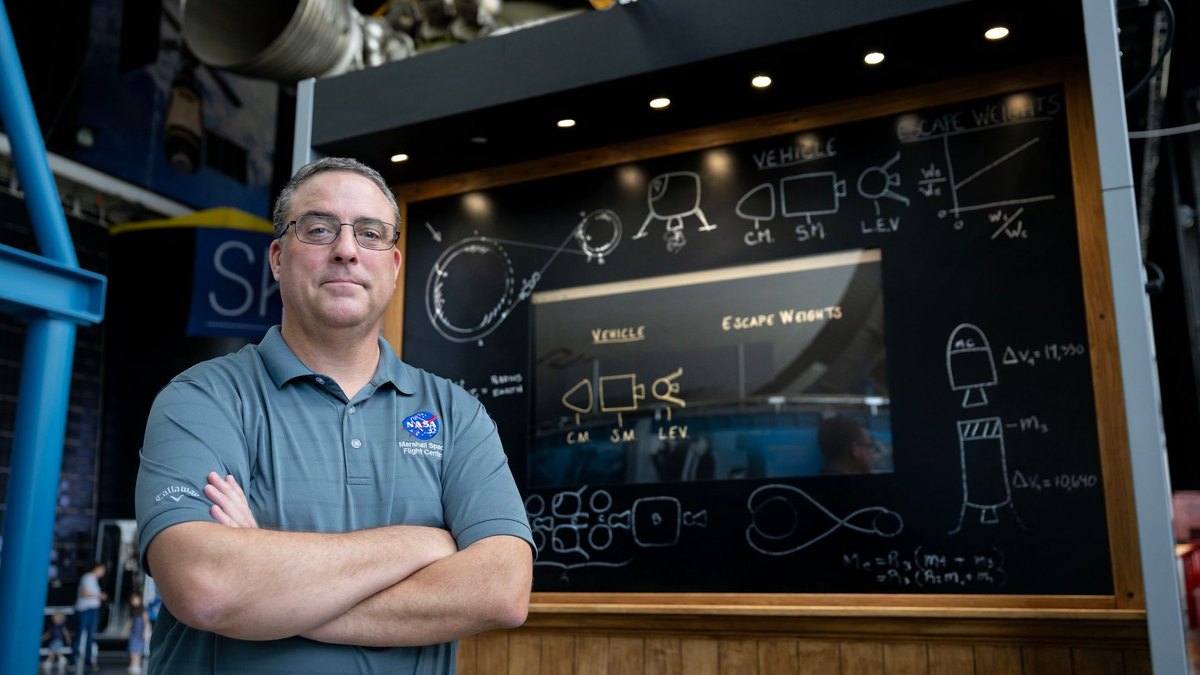
NASA has highlighted the role of Tom Percy, manager of systems engineering and integration for the agency's Human Landing System Program, as it moves to increase the cadence of Artemis missions. In this role, Percy coordinates directly with commercial partners SpaceX and Blue Origin. He leads efforts to streamline lander design, manufacturing, testing, and certification to ensure crewed landers integrate safely with other NASA assets.
Percy grew up in North Easton, Massachusetts, before earning a bachelor's degree in mechanical engineering from the Rochester Institute of Technology. As president of his university's American Society of Mechanical Engineers chapter, he led a team in NASA's Great Moonbuggy Race in Huntsville, Alabama. The experience at Marshall Space Flight Center prompted him to target the research facility for his career.
Graduate studies took Percy to the Georgia Institute of Technology, where he earned a master's degree in aerospace engineering through work in advanced propulsion and space systems design. He later completed a doctorate in aerospace systems engineering at the University of Alabama in Huntsville.
Since starting at Marshall in 2003, Percy has evaluated deep space transportation architecture options for missions to the Moon and Mars. His technical expertise spans space transportation, trajectory analysis, and spacecraft concept development. Following the Artemis II flight, NASA and its commercial providers are preparing for increasingly complex surface missions designed to establish an enduring human presence on the Moon.