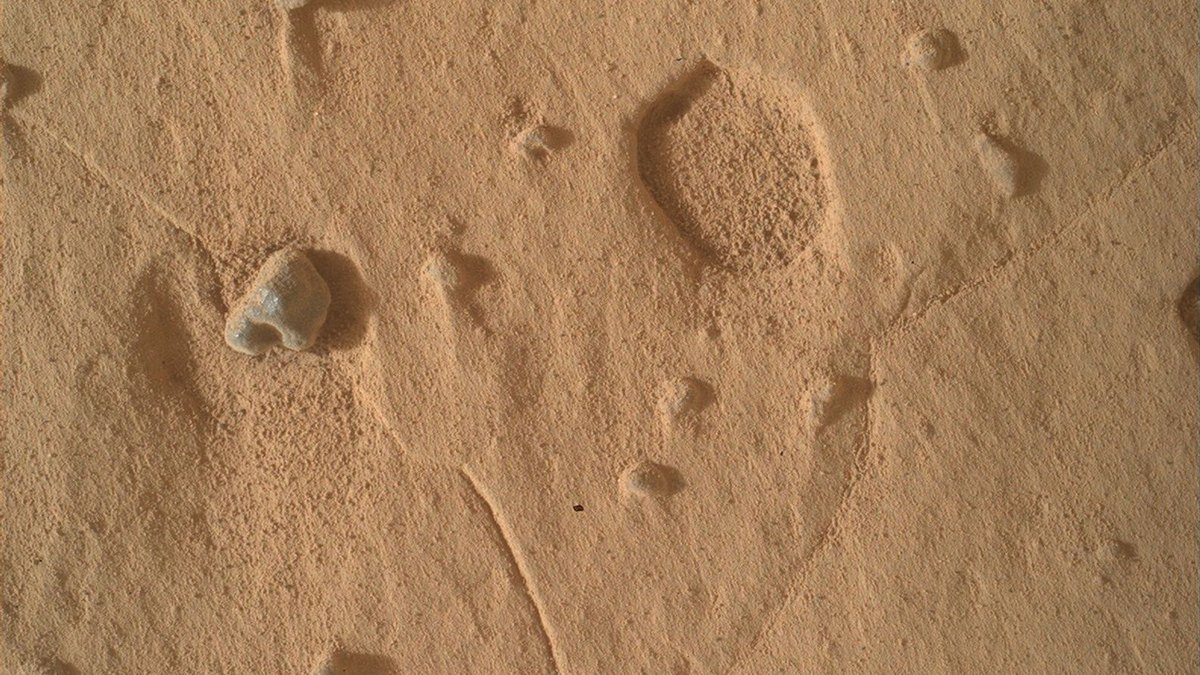
NASA's Curiosity rover discovered unusual broad, shallow pits across bedrock during its 14th year on Mars, the space agency reported. The rover encountered these features in both of its workspaces during sols 4988 through 4994 on Mount Sharp. While weathering nodules or pebbles typically leave voids behind in Martian rock, these pits were distinctly broader and shallower than previously observed voids and lacked visible remnants of past interior objects.
Science teams directed the rover's MAHLI and Mastcam instruments to capture stereo mosaics and overlapping image sets to generate digital elevation models of the pit structures. Mastcam also photographed layered bedrock sections showing abrupt vertical changes in texture and structure, which may reflect shifting depositional conditions. The ChemCam, MAHLI, and APXS instruments analyzed rough, gray resistant layers that differed chemically from the surrounding host bedrock, while ChemCam tested a loose gray float pebble to investigate its origin.
Rover operations also focused on several distant landmarks. Curiosity gathered a complete Mastcam mosaic across the visible face of the Cordillera butte alongside ChemCam Remote Micro-Imager mosaics targeting individual horizons. Farther south down Valle Grande, ChemCam examined the Tolhuaca and Potosí buttes to detect potential crossbedding and assess the mineralogy of dark material capping Potosí.
Environmental sensors tracked atmospheric conditions over the same period. The mission team scheduled REMS, Mastcam, and Navcam observations at an accelerated cadence to monitor a potential regional dust storm, finding by the end of the week that the storm appeared to dissipate. The rover completed the operational sequence despite losing one planning day to a lost downlink.
