Researchers studying silicic volcanic eruptions have determined that sustained ash emissions occurring alongside lava flows represent a widespread and under-recognized hazard, according to a report published in Nature Communications.
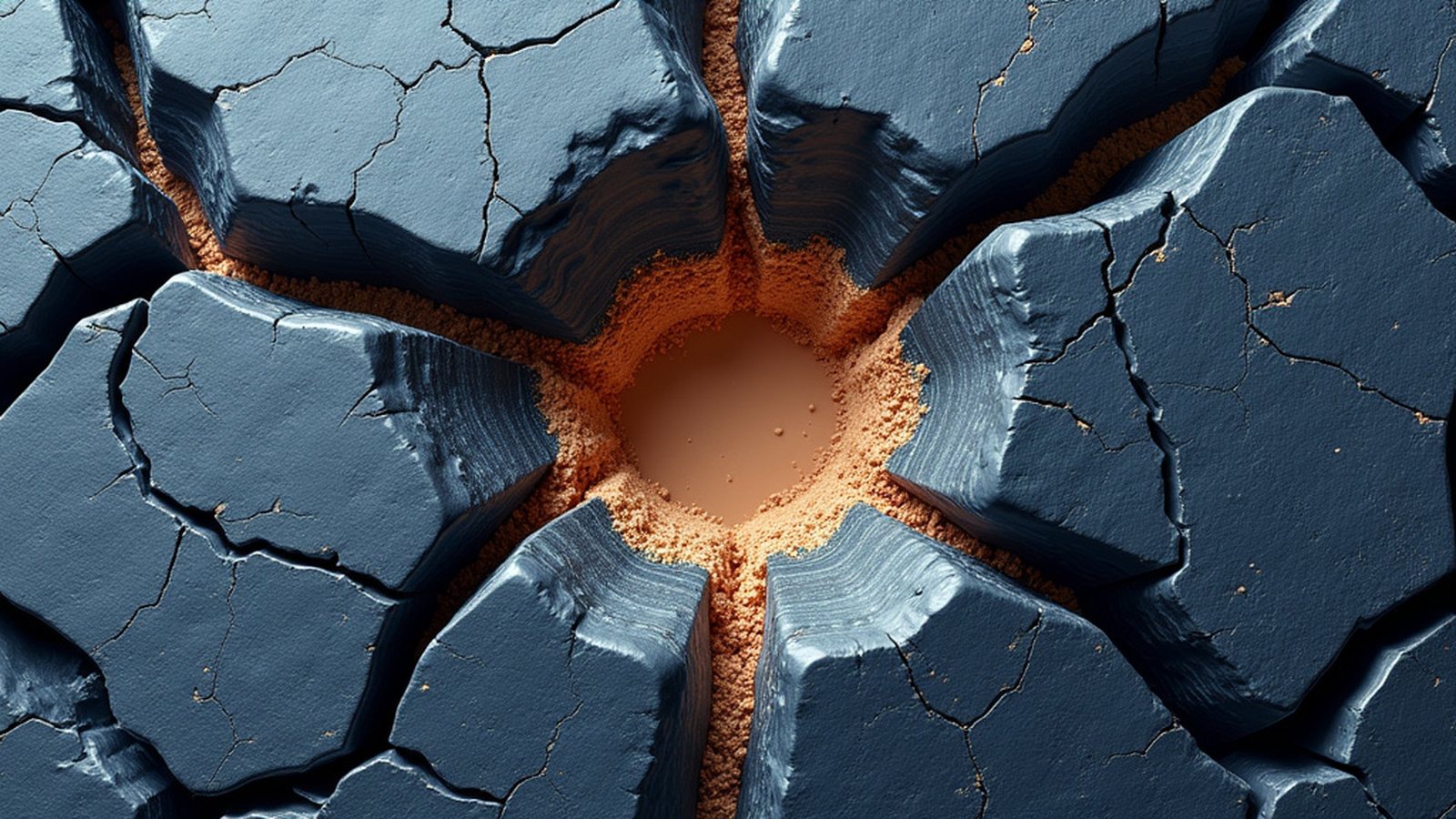
Hybrid silicic volcanism occurs when explosive ash venting happens at the same time as lava effusion. Volcanologists previously documented this phenomenon in only a handful of locations, most prominently during the 2011 to 2012 eruption of Cordón Caulle in Chile. That eruption left thin veneers of ash welded onto fractures within the cooling lava.
Geological Evidence
A research team led by Jingwei Zhang of Lancaster University identified identical ash veneers on Holocene rhyolitic lavas at Torfajökull in Iceland and on the Italian island of Lipari. At Torfajökull's Hrafntinnuhraun lava field, produced during an eruption in 877 CE, researchers found that these welded ash coatings are widespread across the site.
The distribution at Hrafntinnuhraun demonstrates that ash venting persisted over an extended period alongside lava effusion, matching patterns observed at Cordón Caulle. Based on the material and textural complexities found within the ash coatings, the authors developed a quantitative ash capture model to explain how lava flows trap escaping ash particles.
Study Details
The findings indicate that hybrid volcanic activity is a routine feature of silicic eruptions rather than an isolated anomaly. The peer-reviewed paper was submitted on January 19, 2026, accepted on July 29, 2026, and officially published on August 8, 2026. The research involved co-authors from institutions including Ludwig-Maximilians-Universität München, Niigata University, the British Geological Survey, the University of Edinburgh, the University of Oxford, and the Nature Conservation Agency of Iceland.