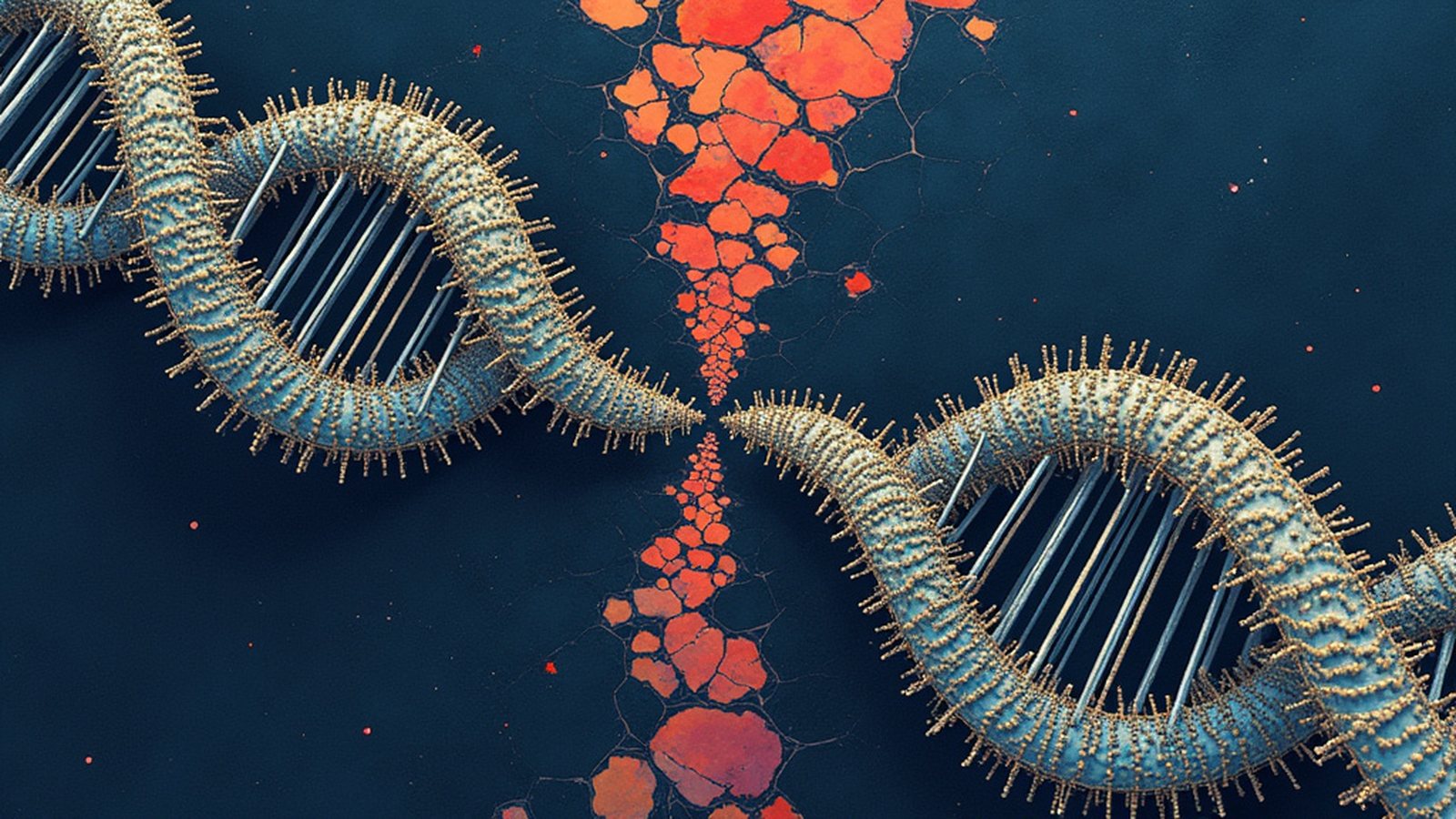
Researchers at Zhejiang University School of Medicine identified a specialized ribosome mechanism that drives chemoresistance and DNA repair in colorectal cancer cells, according to a peer-reviewed study published Aug. 4, 2026, in Nature Communications.
The study, led by co-first authors Saisai Wei, Wentao Yu, and Yilin Shen alongside corresponding researchers Xiangwei Gao and Xiujun Cai, examined the ribosomal protein paralog RPL22L1. When colorectal cancer cells sustain DNA damage, the cells upregulate RPL22L1 and incorporate the protein into ribosomes. Ribosome profiling showed that these RPL22L1-specific ribosomes selectively translate messenger RNAs that feature highly structured 5’ untranslated regions.
The specialized ribosomes boost the translation of ATRX through a cap-independent mechanism. Once translated, ATRX recruits the enzyme DNA-PKcs directly to sites of DNA damage, which increases overall DNA repair capacity within the cancer cells.
Depleting RPL22L1 reversed this protection. In tests conducted both in vitro and in vivo, the loss of RPL22L1 created vulnerabilities in the DNA damage response pathway, sensitizing colorectal cancer cells to cisplatin and poly(ADP-ribose) polymerase (PARP) inhibitors.
The research team included investigators from Sir Run-Run Shaw Hospital's Key Laboratory of Laparoscopic Technology, Department of General Surgery, Department of Infection Prevention and Control, and Department of Clinical Laboratory, as well as the Institute of Environmental Medicine at Zhejiang University. Grants 82573759 and 82372727 from the National Natural Science Foundation of China and grant LZ23H160003 from the Natural Science Foundation of Zhejiang Province supported the project. The authors declared no competing interests.
