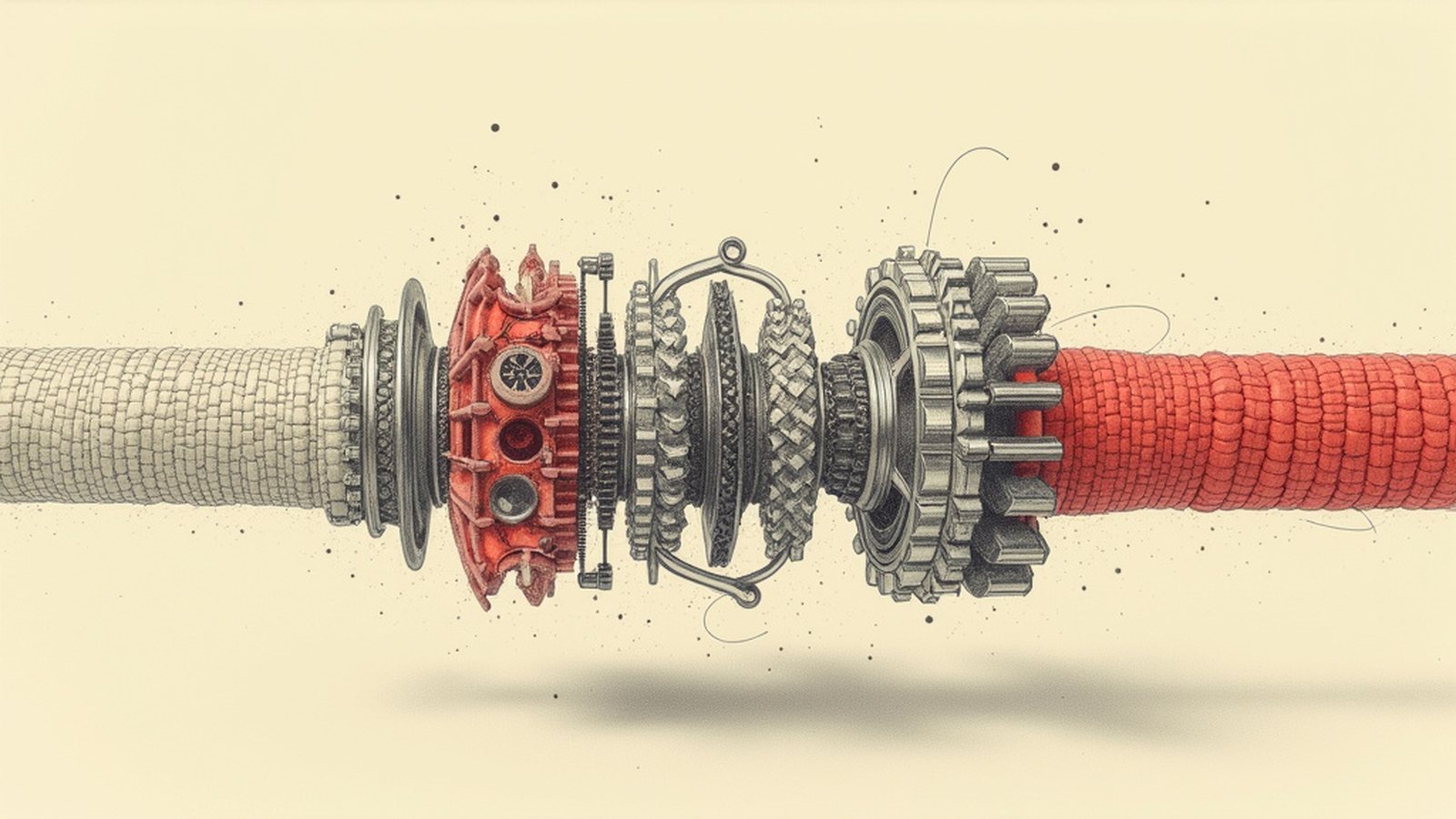
Robotic exoskeleton developers are moving away from heavy clinical rehabilitation suits and toward lightweight systems designed to assist everyday movement, Nature reported. Rather than replacing lost motor function entirely, newer systems estimate biological force in real time and supply a fraction of the power needed to walk or climb.
The engineering shift comes as countries such as Japan, China, and Italy face rapidly ageing populations. According to the World Health Organization, the global population aged 60 and older will reach 2.1 billion by 2050. Researchers are targeting devices such as powered knee braces and robotic shorts to alleviate joint strain and extend mobility.
Task-agnostic control
Modern devices increasingly rely on task-agnostic control rather than fixed, preset movement loops. At the Georgia Institute of Technology, researchers created an artificial-intelligence framework that estimates real-time hip movement across varied walking speeds, inclines, and stair heights. Gregory Sawicki, a biomechanist at Georgia Tech, compared the development of these broad motion models to creating a wearable electric bicycle.
Actuator mechanics have also changed. Earlier exoskeletons used small, fast-spinning motors paired with large gear trains, which often produced rigid resistance. Newer builds use larger, slower motors with lower gear ratios to minimize friction. At the University of Michigan, roboticist Robert Gregg is leading a $2 million project adapting motorized knee braces to deliver 25% to 30% of biological joint force. In a four-person pilot trial, participants reported less pain when standing up and climbing stairs.
Lighter materials and field tests
Weight reductions are narrowing the gap between robotics and apparel. Taylor Dick, a neuromuscular biomechanist at the University of Queensland, noted that older clinical units designed for stroke recovery weighed as much as 23 kilograms. In contrast, researchers at the University of Heidelberg developed WalkON, a soft harness weighing under 3 kilograms. In tests, WalkON reduced metabolic walking costs by 10% in ten older participants and decreased uphill energy expenditure by 18% in younger adults.
Commercial manufacturers are also testing wearable assist hardware for broader consumer use. Nike and robotics firm Dephy developed Project Amplify, a prototype powered footwear system that uses a motor, drive belt, and rechargeable battery around the ankle. In China, tourists can rent exoskeleton devices to traverse steep sections of the Great Wall.
Technical hurdles, fitting times, and long-term physiological questions remain under study. Tomohiro Shibata, a roboticist at the Kyushu Institute of Technology, pointed out that some clinical systems take 20 minutes to fit onto patients. Researchers are also investigating whether robotic assistance will encourage higher physical activity or lead to muscle atrophy through physical overreliance.