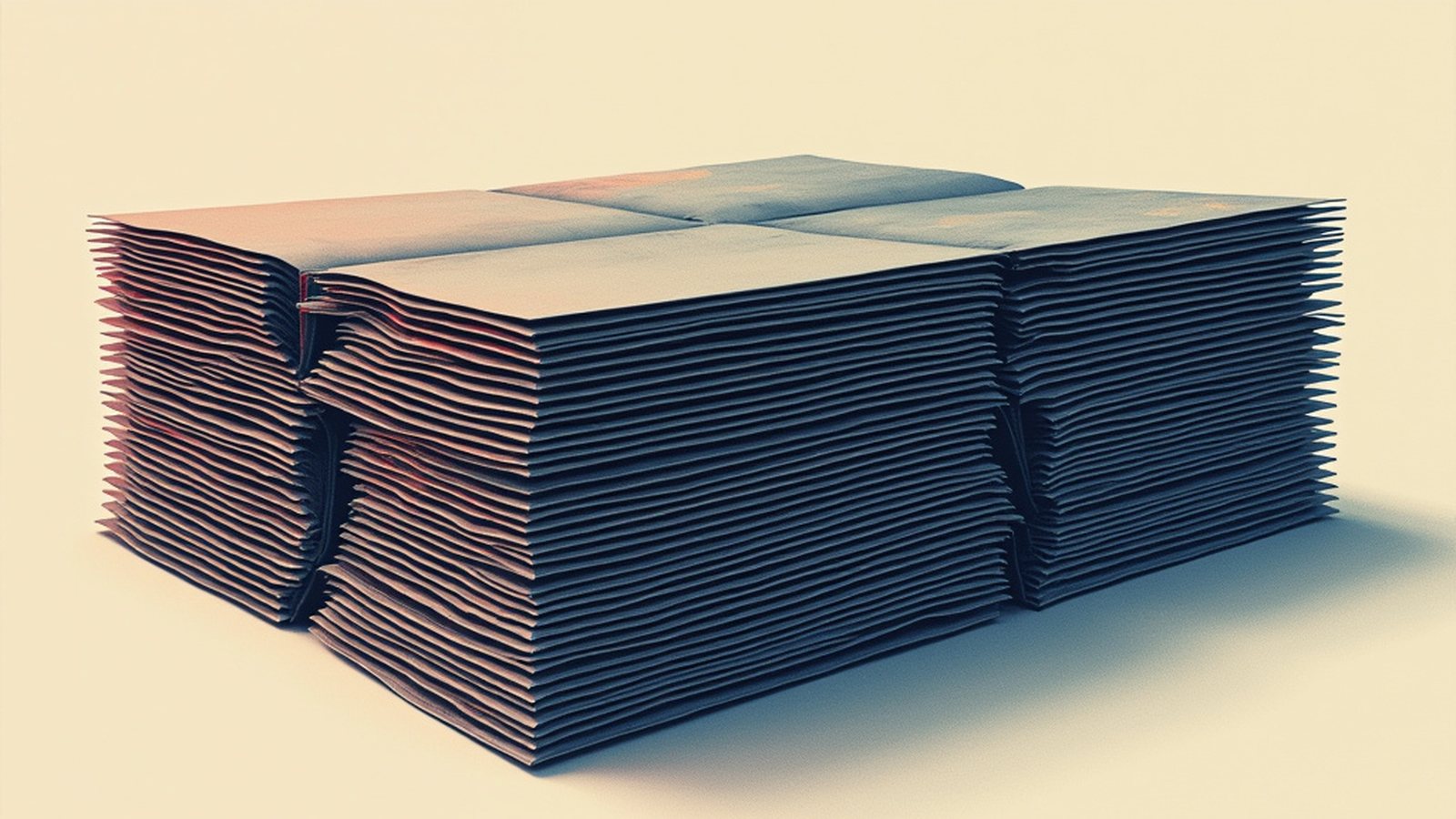
Southeast University researchers have developed a crack-resistant, insulating cementitious material using a rolling-folding process inspired by puff pastry, according to a peer-reviewed study published in Nature Communications.
The fabrication method operates under ambient conditions to create an ordered lamellar architecture. That structure alternates parallel cement lamellae with discrete plate-like cavities, producing ductile fracture behavior and high fracture toughness alongside effective thermal insulation.
Measurements showed the material achieved a specific fracture toughness of up to 91 MPa·mm0.5/g·cm3, which is roughly 20 times higher than its cast counterpart. That figure surpasses conventional reinforced cementitious composites and approaches levels recorded in certain polymers. Meanwhile, thermal conductivity dropped to 0.38 W/m·K, representing a 68.3% reduction relative to cast cement and outperforming lightweight cementitious materials of comparable densities.
Existing architected cementitious materials rely on complex and energy-intensive fabrication methods that limit their scalability and real-world deployment. The research team noted that their ambient rolling-folding approach offers manufacturing efficiency, geometric adaptability, and scalability, helping overcome past barriers to next-generation infrastructure materials.
Researchers Kailun Xia, Yuning Chen, Xingzi Liu, Siyuan Qiu, Qian Lin, Yi Tang, Tiantian Xiang, Sule Chen, Enlai Dong, Wei Wang, Yu Chen, and Yamei Zhang conducted the work across Southeast University, the University of Science and Technology of China, and Nanjing Tech University. The project received research funding from the National Natural Science Foundation of China under grant numbers 52478239 and 52130210, alongside grant CXJH_SEU 25152 from the SEU Innovation Capability Enhancement Plan for Doctoral Students.