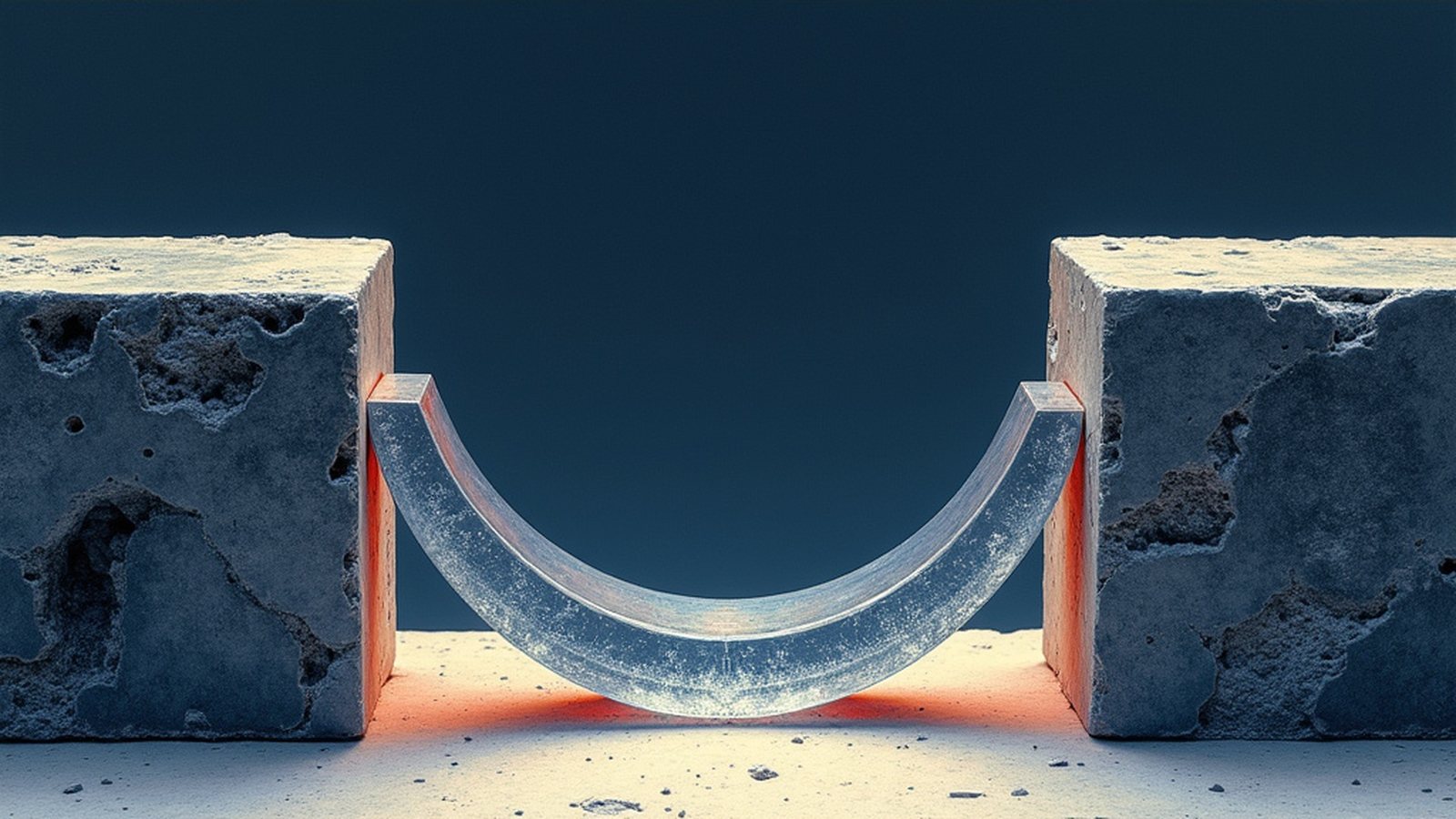
Researchers at Sichuan University and the China Academy of Engineering Physics have developed a force-driven sintering strategy to manufacture highly curved transparent ceramics without compromising their mechanical or optical qualities, according to a study published in Nature Communications.
The manufacturing process synchronizes external mechanical forces with intrinsic material creep and stress relaxation. By applying continuous stress release, the method triggers a dynamic curvature reversal phenomenon caused by cyclic stress accumulation and release. This mechanism allows for the single-step fabrication of complex-shaped transparent components suitable for advanced optics and armor applications.
Performance and scale
Using the force-driven technique, the researchers produced large-scale curved MgAl2O4 ceramics measuring 0.5 by 2 by 22 centimeters. The resulting components achieved a curvature greater than 5.36 m−1 alongside light transmittance exceeding 85 percent, a figure approaching the material's theoretical limit. The study reported that these pieces matched the highest mechanical properties previously recorded for the material.
To establish the versatility of force-driven sintering beyond MgAl2O4, the team applied the technique to fabricate curved Al2O3 transparent ceramics.
Project details
Xincheng Cai, Xiaoqiang Li, and Tiecheng Lu contributed equally to the research, which was submitted in October 2025 and accepted for publication in July 2026. The project received backing from the National Key R&D Program of China, the Science and Technology Program of Sichuan Province, the National Natural Science Foundation of China, and the China Academy of Engineering Physics.
