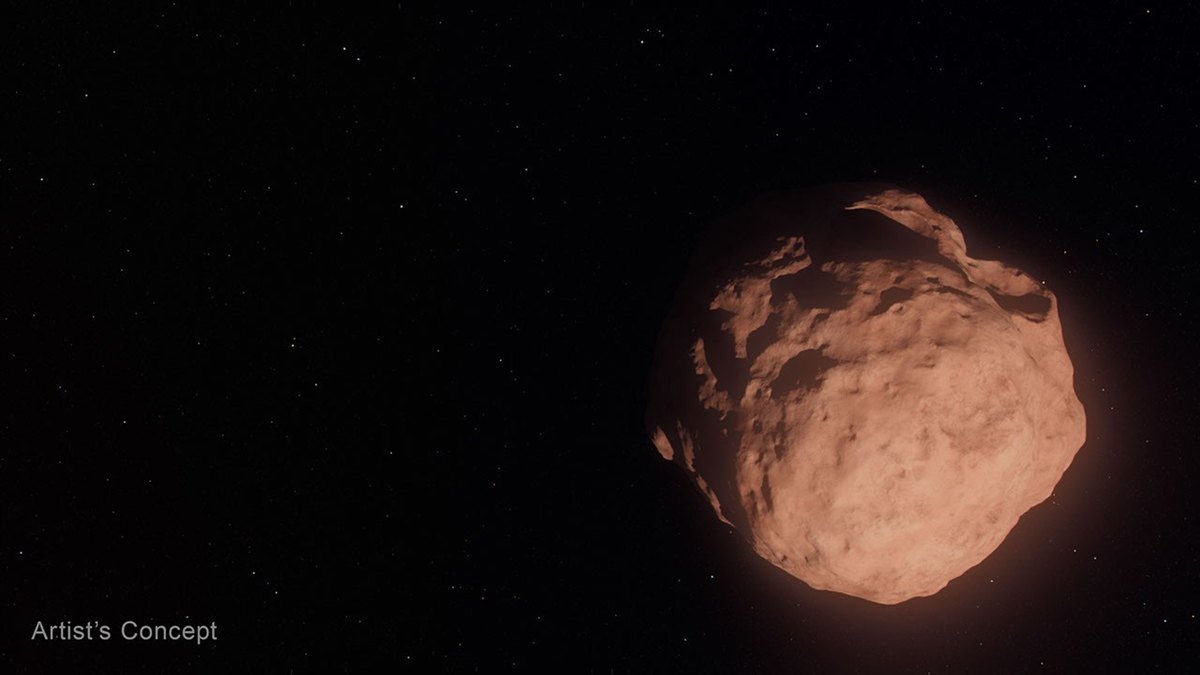
Astronomers using NASA’s Hubble and James Webb space telescopes discovered 27 tiny trans-Neptunian objects orbiting beyond Neptune, NASA announced Tuesday. The joint observations revealed fewer small bodies than predicted by planetary formation models, while showing that the smallest objects share the surface colors and compositions of their larger counterparts.
Two research teams examined the patch of sky simultaneously, pairing Hubble’s visible-light data with Webb’s infrared capabilities. The studies, published in The Astronomical Journal, were led by Northern Arizona University PhD candidate Anastasia Morgan and University of Victoria PhD candidate Marielle Eduardo, alongside the National Research Council of Canada.
Webb detected objects more than 100 million times dimmer than what the unaided human eye can see, including one body with light equivalent to a swarm of fireflies on the Moon viewed from Earth. The smallest detected object measures about 3 miles (5 kilometers) across. That width is roughly five times smaller than the detection threshold of the most sensitive ground-based telescopes.
Researchers analyzed two distinct populations: dynamically "cold" objects in circular orbits along the solar system's plane, and dynamically "hot" objects that formed between Uranus and Neptune before early giant-planet migrations pushed them into elliptical orbits. Astronomers previously expected small bodies in both groups to show altered surface colors caused by fragmentation and impacts. Instead, both groups preserved their original colors and exhibited matching size distributions.
Both space observatories rely on international operational partnerships. Hubble is managed by NASA’s Goddard Space Flight Center with operational support from Lockheed Martin Space and science operations by the Space Telescope Science Institute, while the Webb mission is led by NASA in partnership with the European Space Agency and the Canadian Space Agency.
