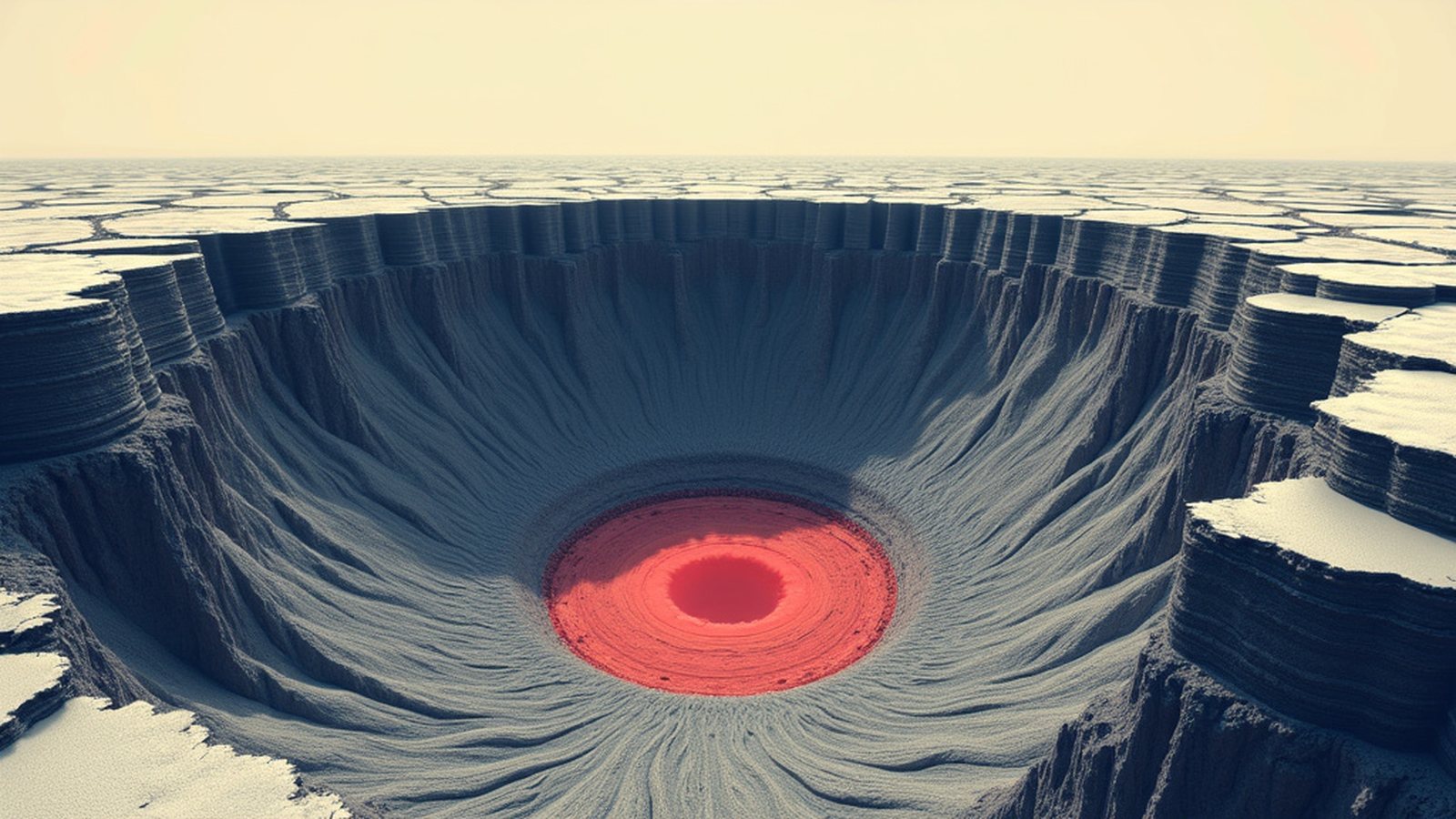
The European Space Agency released a three-dimensional flyover animation of Schiaparelli Crater on Mars, generated from High Resolution Stereo Camera observations made by the Mars Express spacecraft.
The crater spans 460 kilometres across yet appears relatively shallow. ESA noted that windblown sediment, water deposits, lava flows, or a combination of the three may have filled the basin over billions of years.
The geological feature takes its name from Italian astronomer Giovanni Schiaparelli, who lived from 1835 to 1910. Schiaparelli mapped the Red Planet during the 1877 Great Opposition and described straight dark lines on the surface as “canali”, the Italian term for natural channels. Other astronomers translated the term as artificial canals, prompting public belief in intelligent Martian builders. Space agencies now recognize those lines as optical illusions produced by early telescopes, although scientists believe water once existed in the region as a lake.
The location also served as the primary destination for fictional astronaut Mark Watney in the Andy Weir novel The Martian.
To create the animation, the production team combined High Resolution Stereo Camera Mars Chart data centred at 8°S/17°E with a digital terrain model. The video renders 50 frames per second along a set camera path with a three-fold vertical exaggeration, introducing atmospheric haze starting at a distance of 250 kilometres.
The Planetary Science and Remote Sensing working group at Freie Universität Berlin created the film using data systematically processed at the DLR Institute for Space Research in Berlin-Adlershof. The German Aerospace Center operates the camera onboard Mars Express.
