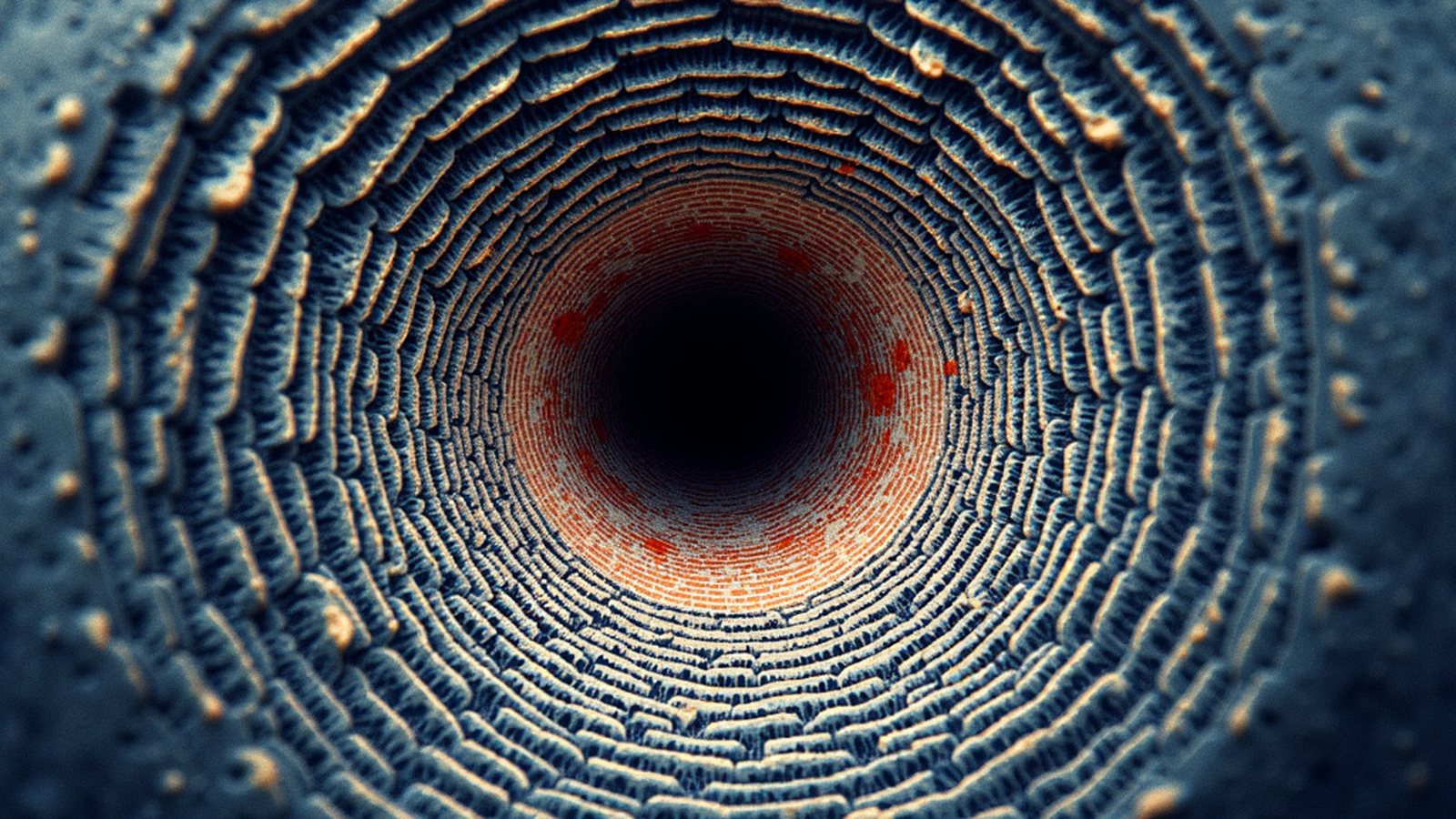
Researchers have developed a reactive-emulsion-mediated method to transform liquefied wood into programmable mesoporous carbon nanomaterials, according to a peer-reviewed paper published in Nature Communications. The technique addresses the intrinsic heterogeneity of raw biomass, an obstacle that previously prevented controllable self-assembly and precise architectural control in biomass-derived carbon systems.
The synthesis relies on trioctyl phosphate, or TOP, which functions simultaneously as a hydrophobic swelling agent for composite micelles and an interfacial modifier. Introducing TOP alters micelle curvature and packing tendencies. Consequently, the chemical system shifts assembly pathways from homogeneous aqueous self-assembly toward interface-associated anisotropic organization. This dual regulation reduces the density of ordered mesochannels inside the fibrous framework.
That structural evolution moves from ordered mesoporous nanofibers to hollow nanofibers and bowl-like architectures. The researchers used the fabricated hollow carbon nanofibers to build a mixed ion-electron thermoelectric generator, or MTEG. Testing the generator showed a thermopower of 12.33 mV K–1 across 40 kΩ.
Northeast Forestry University and Inner Mongolia University carried out the research. The author group included Yang Li, Kun Zhang, Shenghui Jiao, Guangying Li, Yanhong Liu, Shirui Zou, Rui Teng, Hongjian Fu, Chunhui Ma, Sha Luo, Wei Li, and Shouxin Liu. The team acknowledged Zhenwei Wu for foundational contributions to preliminary work, Kun Zhang for experiment and simulation guidance, and Wenjing Zhang for continuous support.
The National Natural Science Foundation of China financed the study under project numbers 32530074 and 32371808. Nature Communications received the manuscript on March 2, 2026, accepted it on August 18, 2026, and released the article on August 29, 2026. The authors declared no competing interests.