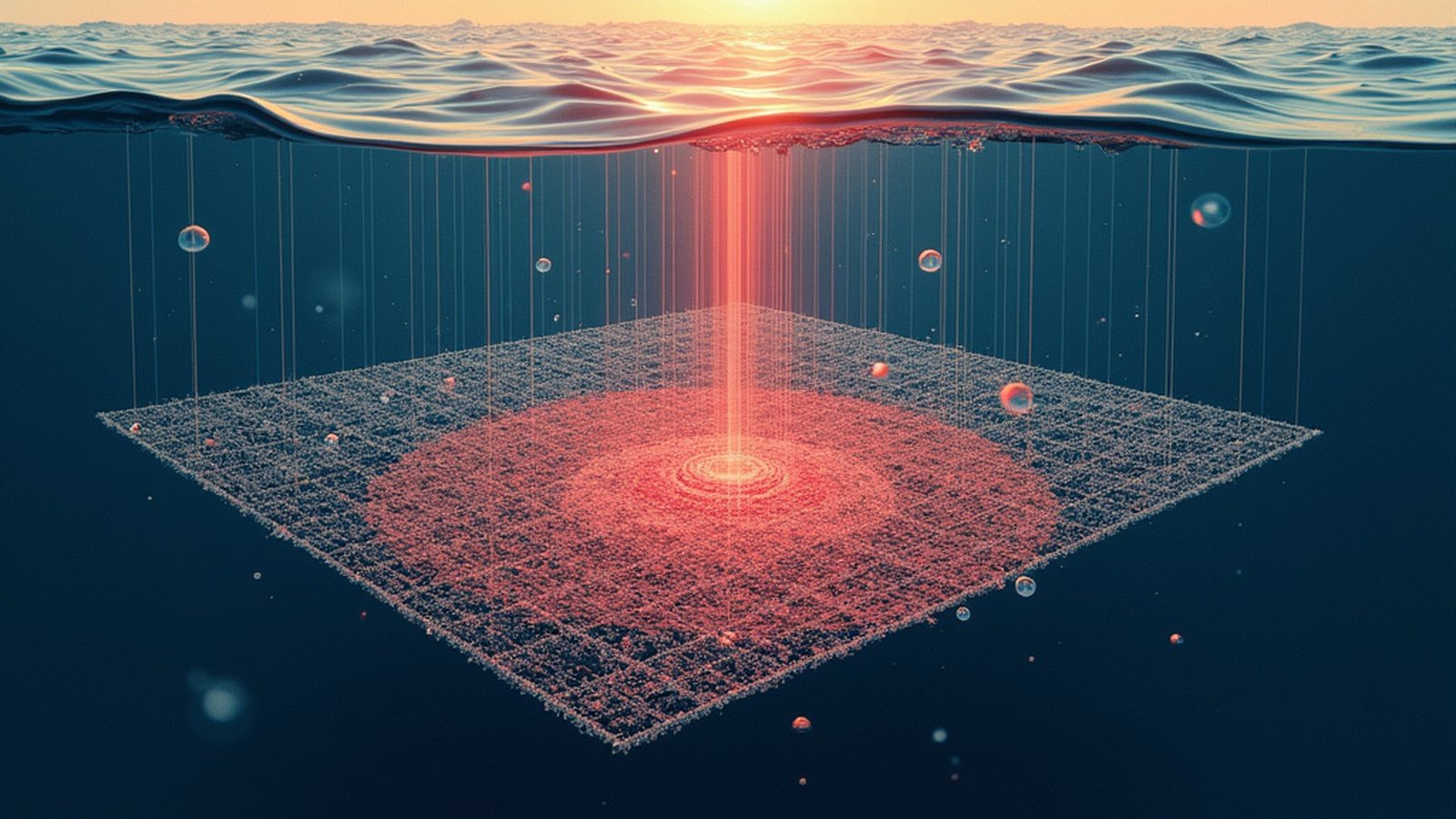
Researchers at Fuzhou University, Shinshu University, and the University of Tokyo have activated long-distance out-of-plane charge carrier transport in two-dimensional polymer photocatalysts, according to research published in Nature. The team used polymeric carbon nitride crystals as model systems to move charge carriers across van der Waals-bonded layers over distances of about 200 nanometers.
Solar-driven water splitting with semiconductor particulates creates hydrogen, but photoexcited states in two-dimensional π-conjugated polymers usually stay confined within two-dimensional planes. This confinement leaves charge carriers vulnerable to recombination and limits quantum efficiency in polymer photocatalysis.
Encapsulating nanofilms applied to different polymer facets created lateral and vertical internal electric fields across the material. These internal electric fields force carrier flow through stacked layers, shifting the material from two-dimensional confined excited states into kinetic-driven three-dimensional spatially separated states.
Testing showed that applying a lateral internal electric field boosted the apparent quantum efficiency for overall water splitting to 53.4 percent. A vertical internal electric field increased the apparent quantum efficiency to 82.1 percent.
Optical measurements indicated that applying vertical fields on the crystal facet lowered the exciton dissociation energy barrier to 21 melectronvolts. This reduction brought the barrier below the room-temperature thermal energy of about 26 melectronvolts, enabling thermally accessible exciton dissociation.
Structural analysis identified an amorphous lithium pyrophosphate nanofilm measuring about two nanometers thick on the prismatic facet of surface-phosphorylated crystals. Sequential photodeposition experiments using cobalt oxide and rhodium probes showed distinct spatial segregation of electron and hole signals across different crystal facets.