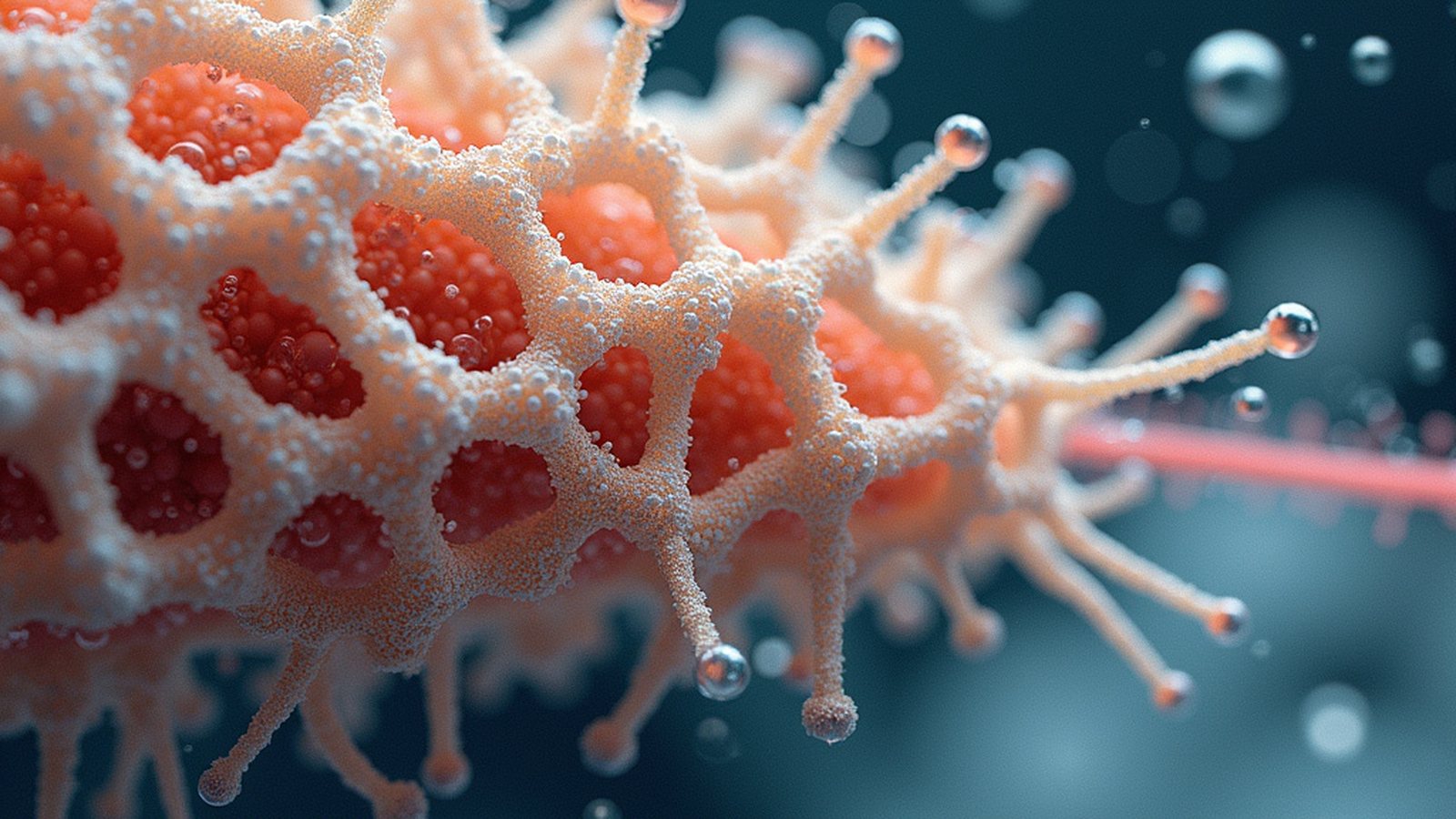
Researchers have engineered hybrid exosomal nanomotors that convert reactive oxygen species into directional movement to penetrate cartilage in osteoarthritis models, according to a peer-reviewed study published in Nature Communications.
Osteoarthritis treatments often fail because drug delivery within cartilage is restricted by a dense extracellular matrix and rapid clearance from the joint. The engineered nanomotors, designated CAP-Mn/140@hyExos, address this physical barrier by using the joint's oxidative microenvironment to overcome diffusion-limited transport.
Manganese dioxide nanoparticles inside the motors catalyze the decomposition of hydrogen peroxide, which drives reactive-oxygen-species-responsive motion. At the same time, an attached cartilage-targeting peptide strengthens interactions with the tissue matrix to help the motors accumulate in target areas.
The system achieved tissue penetration depths of approximately 140 micrometers, an uptake increase in cells of roughly 2.5-fold, and prolonged joint retention, leaving about 30 percent of the material in place after two weeks. The resulting movement allowed intracellular delivery of microRNA-140 and manganese dioxide, which reduced oxidative stress and stimulated cartilage repair.
Tests in a rat model of osteoarthritis showed that the treatment suppressed disease progression, restored microarchitecture in subchondral bone, and improved animal gait performance.
Kai Huang, Hui-Zhi Liu, and Yuan Liu contributed equally to the study, which included investigators from West China Hospital at Sichuan University and Shanghai Jiao Tong University School of Medicine. Funding came from the National Natural Science Foundation of China, the National Key Research and Development Program of China, and the Sichuan Science and Technology Program.