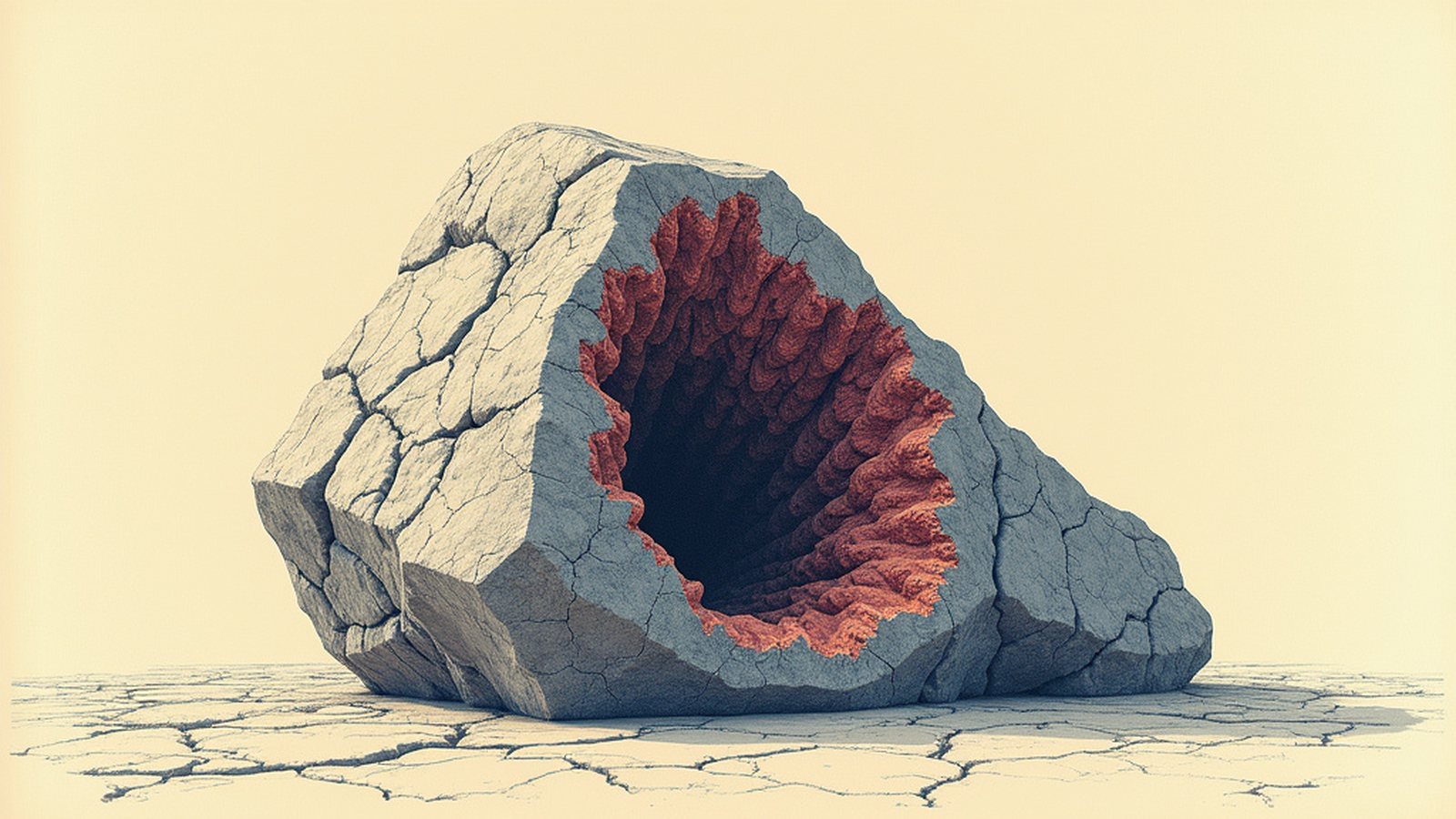
MIT researchers have mapped the internal three-dimensional pore networks of irradiated metallic nuclear fuel, revealing how microscopic structures evolve across a reactor rod under operation.
According to reporting published by MIT, the research team examined uranium alloyed with 10 percent zirconium by weight, a metallic fuel known as U-10Zr. The material was tested extensively in historic sodium-cooled fast reactors, including the Experimental Breeder Reactor-II in Idaho and the Fast Flux Testing Facility in Washington state, and is now under renewed evaluation for next-generation advanced reactors.
Idaho National Laboratory prepared and managed the fuel samples, which came from the Fast Flux Testing Facility that operated between 1982 and 1992. MIT researchers examined the prepared material at Brookhaven National Laboratory using high-energy synchrotron X-ray computed tomography, reconstructing how porosity, chemistry, and fuel-cladding interactions change across the fuel radius.
Pore structure and chemistry
The tomography data showed that pore density jumped by more than two orders of magnitude at the fuel rod's outer edge near the cladding, even though overall porosity increased only modestly from the center outward. Rather than forming isolated spheres, the pores merged into complex, elongated networks pointing toward the edge.
The researchers found that local chemical compositions directly influenced pore shapes. Postdoctoral researcher and first author Anthony Harrup stated that whether a local area was uranium-rich or zirconium-rich changed the morphology and channels of the pores, a relationship not previously documented.
These outer pore networks allow fission products and rare earth elements called lanthanides to migrate toward the surrounding cladding, causing metal embrittlement and slowing heat transfer. However, senior author Ericmoore Jossou noted that interconnected pores also provide operational benefits at high temperatures by releasing trapped fission gases to reduce fuel matrix stress and providing pathways for liquid sodium to sustain thermal conductivity.
Program details
The research paper included co-authors Riley Moeykens of MIT, Michael Drakopoulos and Nghia Vo of Brookhaven National Laboratory, and Jana Howard, Colby Jensen, and Tiankai Yao of Idaho National Laboratory. Oxford University professor Dong Liu, who was not involved with the study, noted that the work successfully linked three-dimensional pore topology directly to the thermal properties of irradiated U-10Zr fuel.
The U.S. Department of Energy Office of Nuclear Energy supported the project. Sample preparation took place at Idaho National Laboratory through a Rapid Turnaround Award from the Nuclear Science User Facilities, using experimental resources at both Idaho and Brookhaven National Laboratories.
