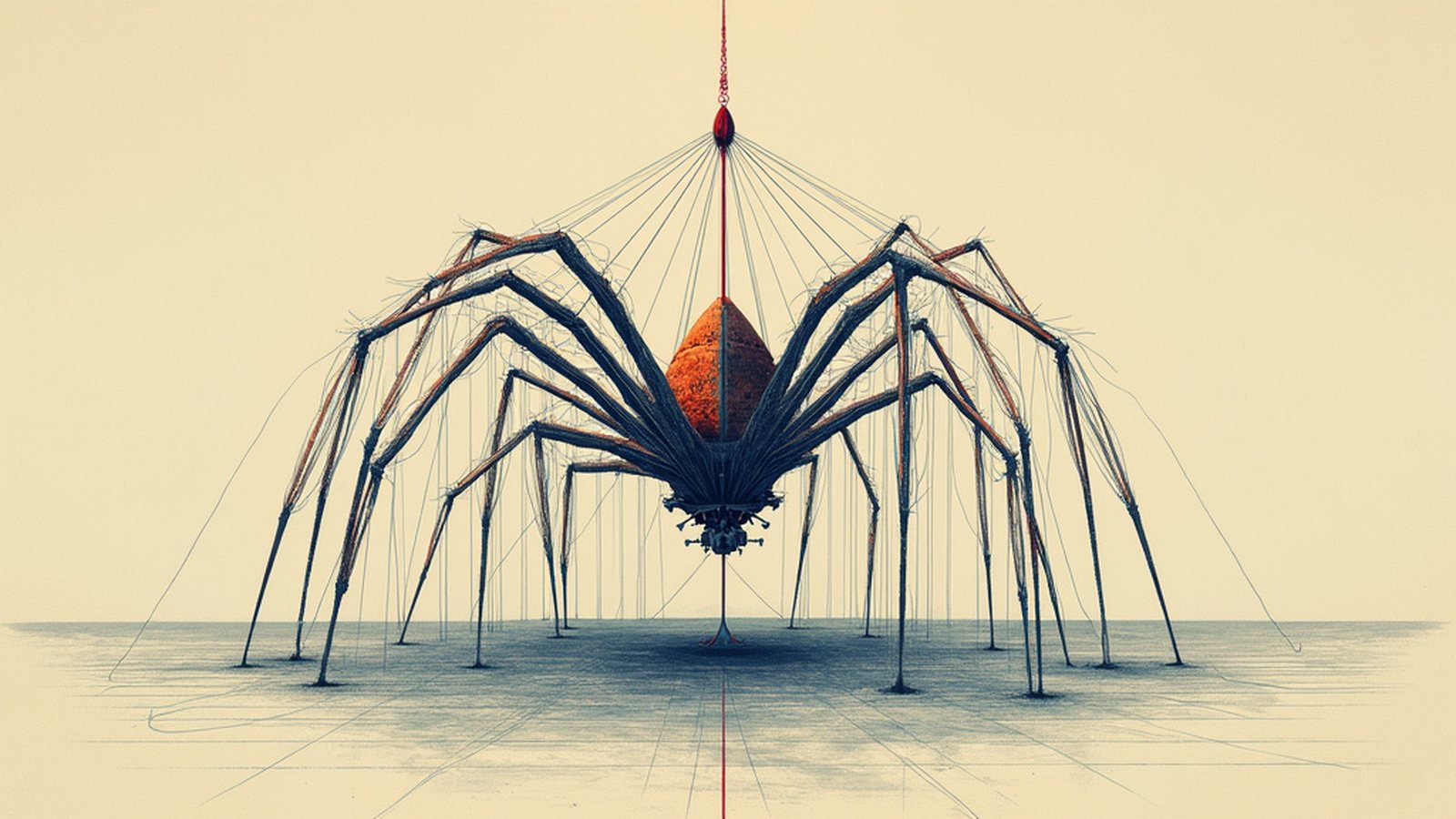
A single adversarial node can destabilize an entire functioning network by targeting a node with few incoming connections rather than a major hub, researchers reported in Nature Communications. The study demonstrates that concentrating an intruder attack on a single low-indegree node triggers the highest level of instability across the system.
Stable dynamic states are essential for functions such as power grid balance, synchronization, consensus, and formation control. The authors found that an intruder agent linked through adversarial connections to one or more nodes is sufficient to collapse these collective states. This finding establishes low-indegree nodes as the most vulnerable components in a network, directly challenging the widespread view that central hubs are the primary failure points.
While the mathematical proofs were originally derived for linear systems, the team demonstrated that the results also apply to nonlinear networks, including the Kuramoto model. The authors noted that this structural weakness represents an intrinsic vulnerability present in biological, technological, and social networks alike.
Amirhossein Nazerian, David Phillips, and Francesco Sorrentino conducted the work alongside co-authors across multiple institutions. Participating institutions include the University of New Mexico, K. N. Toosi University of Technology, Florida State University, City College of New York, and the Max Planck Institute for the Physics of Complex Systems. Financial support was provided by the Air Force Office of Scientific Research under grant FA9550-24-1-0214, Oak Ridge National Laboratory, the Florida State University CRC-SEED program, and the National Science Foundation. Open access funding was organized through Projekt DEAL. The journal received the submission on February 7, 2026, and accepted it on July 27, 2026.