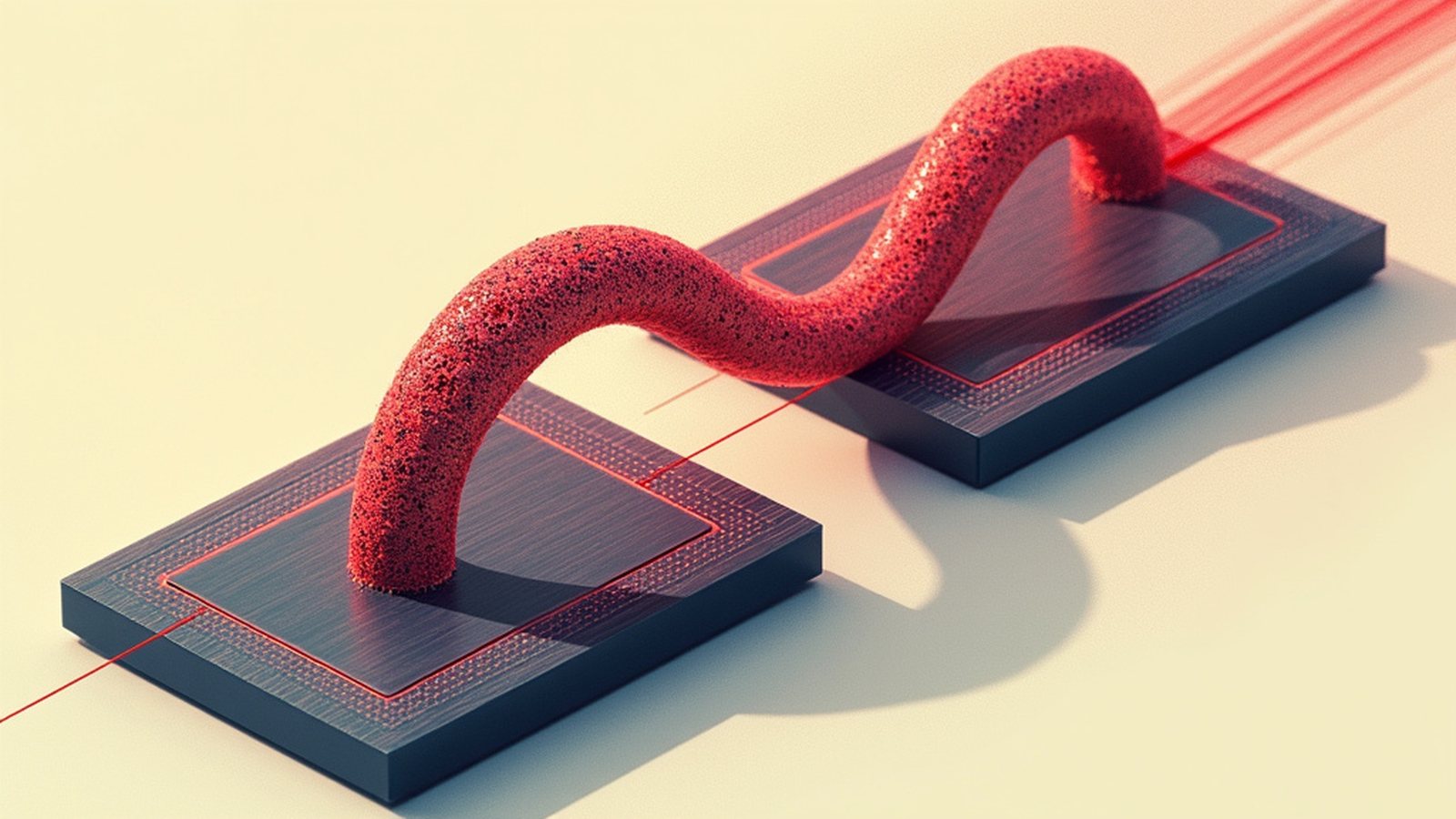
Coupled chip-scale lasers have revealed braided spectra to enable real-time visualization of non-Hermitian topology, according to research published in Nature Physics on August 7, 2026. Non-Hermitian systems trace braid-like eigenvalue paths that are otherwise difficult to observe directly in physical experiments.
Stockholm University researchers J. Lukas K. König and Emil J. Bergholtz authored the peer-reviewed report from Stockholm, Sweden. Both researchers declared no competing interests in connection with the published findings.
Access Options
Springer Nature provides commercial access to the work alongside institutional login options. A 30-day Nature+ online subscription costs $32.99, granting access to Nature alongside 54 other Nature Portfolio journals. An annual journal subscription featuring 12 print issues and online access costs $259.00 per year, which averages to $21.58 per issue.
Single article purchases range from $1.95 to $39.95 depending on the article type, with final prices subject to local taxes calculated during checkout. Springer Nature made the content available through its SharedIt content-sharing initiative, though the publication noted that a shareable link was not currently available for the article at release.
Citing Literature
References listed in the paper span several key studies in non-Hermitian and topological physics published between 2017 and 2026. These include 2026 papers by W. Mao and co-authors in Nature Physics and K. Wang and co-authors in Physical Review Letters, alongside 2021 research by K. Wang, A. Dutt, C. C. Wojcik, and S. Fan in Nature.
Earlier published studies cited include 2017 research by H. Hodaei and colleagues in Nature, 2018 research by M. A. Bandres and colleagues in Science, 2019 research by M.-A. Miri and A. Alù in Science, and 2022 research by Y. S. S. Patil and colleagues in Nature. The version of record was published on August 7, 2026, under the digital object identifier 10.1038/s41567-026-03399-w.